Dominus Vobiscum

Tampilkan postingan dengan label Renungan - Wawasan. Tampilkan semua postingan

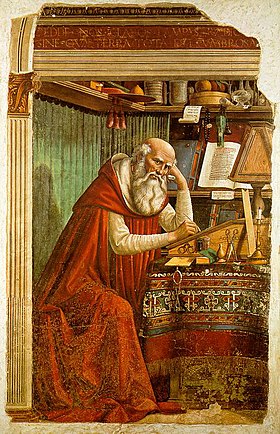
Salah satu dari penduduk Bethlehem yang paling terkenal adalah Hieronimus. Sebagai seorang mahasiswa dalam bidang kesusasteraan klasik, ia berangkat dari Roma ke Palestina pada tahun 384 M. Ini adalah periode saat banyak orang Kristen mengunjungi Tanah Suci dan banyak di antara mereka memutuskan untuk tinggal di sana. Akibatnya beberapa komunitas monastik didirikan untuk menampung mereka yang ingin tinggal untuk belajar dan berdoa.
Hieronimus memutuskan untuk mendirikan komunitasnya di Bethlehem. dekat dengan Gereja Kelahiran yang didirikan oleh Konstantinus. Banyak orang segera bergabung dengan dia termasuk di antaranya seorang perempuan bernama Paula dengan anak perempuannya, Eustochium. Mereka berdua membantu Hieronimus membangun sebuah komunitas yang berarti dan disegani.
Hieronimus terkenal sebagai penerjemah Perjanjian Lama dari paran Perjanjian Baru ke dalam bahasa Latin (dikenal dengan nama Vulgata yang berarti "populer"). Sebelumnya Gereja Barat hanya mempunyai Kitab Suci dalam bahasa Yunani. Selama tinggal di Bethlehem, Hieronimus mempelajari teks Perjanjian Lama dalam bahasa aslinya, Ibrani, serta berdiskusi dengan para rabi lokal sehingga dia dapat menghasilkan sebuah terjemahan yang benar-benar baru. Karyanya bertahan dalam terjangan waktu dan merupakan versi yang otoritatif bagi Gereja Katolik Roma sampai abad ke 20.
Read More …

Says Family Is the Solution

By Salvatore Cernuzio
ROME, JAN. 19, 2012 (Zenit.org).- The decline in births, from the 70s to our days, is what has led us to the present situation of economic crisis.
This was the affirmation made at a symposium on the family held at the Italian Parliament, which included a presentation from Ettore Gotti Tedeschi, president of IOR, the Italian initials for the Istituto per le Opere di Religione, often referred to as the Vatican's Bank.
"If the six of us speakers here today were the government, we would have resolved the economic problem immediately, because we would know where to point: the family," Tedeschi exclaimed. 
Then, he outlined what he termed the five No's, illustrating the negative effects that come about when "births are interrupted and the family and children are ignored in the Western world."
No Growth of the Economy: "In the last 30 years children were not born, and the number of inhabitants that we had in Italy in 1980 has remained unchanged; hence how can the GDP grow when it grows only when there is more consumption?"
Read More …

Berikut jadwal kelompok yang mengadakan kegiatan di lingkungan Kapel Hati Kudus Yesus, Bandung yang berada di sekitar kompleks RS St. Borromeus :

A. Kapel Hati Kudus Yesus

Misa Harian
Senin - Sabtu : 05.45 WIB

Jumat Pertama : 17.00 WIB

Sabtu Sore : 17.30 WIB

Minggu Pagi : 07.00 WIB

Minggu Sore : 17.00 WIB

Ibadat Brevir : 05.15 WIB


B. Legio Maria, Kuria Bunda Pencinta Damai
     Senin : Legio Maria Bunda Perdamaian
     Waktu : 18.00 WIB
     Ketua : Adel
     APR   : Sr. Paula, CB

     Rabu : Legio Maria Redemptoris Mater
     Waktu : 18.00 WIB
     Ketua : Yessi
     APR   : Sr. Ancilina, CB

     Kamis : Legio Maria Bunda Penuh Kasih Sayang
     Waktu : 18.00 WIB
     Ketua : Rama
     APR   : Sr. Stefani, CB

     Jumat  : Legio Maria Ratu Pencinta Damai
     Waktu : 17.00 WIB
     Ketua  : Hotma
     APR    : -

     Sabtu  : Legio Maria Bunda Hati Kudus
     Waktu : 18.00 WIB
     Ketua  : Resta
     APR    : Sr. Vero, CB

     Sabtu/Minggu : Legio Maria Junior Ratu Rosario yang Amat Suci
     Waktu  : 15.00 WIB (tentatif)
      Ketua : Andri
     APR    : -
Read More …

Sebagai ucapan syukur atas akan berlalunya tahun 2011 dan hadirnya tahun 2012, Mudika Kapel St. Borromeus beserta para Suster Cinta Kasih St. Carolus Borromeus, akan mengadakan ibadat tutup tahun 2011 dan pembuka tahun 2012 pada pukul 24.00 bertempat di Kapel Hati Kudus Yesus, Suster-suster Cinta Kasih St. Carolus Borromeus.
Ibadat singkat yang merupakan pertama kali diadakan ini bertujuan untuk mengajak umat merefleksikan apa yang telah terjadi tahun 2011 dan hal-hal yang telah diraih untuk kemudian dijadikan tolok ukur kehidupan di tahun 2012 terutama dalam semangat menghidupi iman Katolik.
Oleh karenanya, kami mengundang rekan-rekan seiman sekalian untuk bersama-sama mengikuti ibadat ini.

Ad Maiorem Dei Gloriam...
Read More …

Mudika Kapel Hati Kudus Yesus Bandung, lingkungan St. Borromeus, mengundang rekan-rekan muda sekalian yang berdomisili di Bandung untuk mengikuti kegiatan Camping Rohani yang akan diadakan pada 13-15 Januari 2012 bertempat di Kawasan Konservasi Masigit - Kareumbi....

acaranya bakalan seru abizzz dan diisi dengan banyak kegiatan yang menantang...!!
so be there!!!
^_^
...
 
Pendaftaran peserta:
18 Desember 2011 - 11 Januari 2012

Format pendaftaran via sms:
Nama lengkap / Jenis Kelamin / Kontak / Alamat / Umur / Paroki Asal
... CP : Josua (085220925848)
Ridwan (085797009106)

Pendaftaran melalui email dengan format yang sama ke :
mcampingrohani@yahoo.com
Read More …

Jadwal Misa Natal & Tahun Baru, Kapel Hati Kudus Yesus Bandung

Misa Natal
Sabtu, 24 Desember 2011
Misa I : Pukul 19.00 WIB

Minggu, 25 Desember 2011
Misa I : Pukul 08.00 WIB
Misa II : Pukul 17.00 WIB


Misa Tahun Baru
Sabtu, 31 Desember 2011
Misa I : Pukul 18.00 WIB

Minggu, 1 Januari 2012
Misa I : Pukul 08.00 WIB
Misa II : Pukul 17.00 WIB


Read More …


POST-SYNODAL
APOSTOLIC EXHORTATION
SACRAMENTUM CARITATIS
OF THE HOLY FATHER
BENEDICT XVI
TO THE BISHOPS, CLERGY,
CONSECRATED PERSONS
AND THE LAY FAITHFUL
ON THE EUCHARIST
AS THE SOURCE AND SUMMIT
OF THE CHURCH'S LIFE AND MISSION
INDEX
Introduction [1]
The food of truth [2]
The development of the eucharistic rite [3]
The Synod of Bishops and the Year of the Eucharist [4]
The purpose of the present Exhortation [5]
PART ONE:
THE EUCHARIST, A MYSTERY TO BE BELIEVED
The Church's eucharistic faith [6]
The blessed Trinity and the Eucharist
The bread come down from heaven [7]
A free gift of the Blessed Trinity [8]
The Eucharist: Jesus the true Sacrificial Lamb
The new and eternal covenant in the blood of the Lamb [9]
The institution of the Eucharist [10]
Figura transit in veritatem
[11]
The Holy Spirit and the Eucharist
Jesus and the Holy Spirit [12]
The Holy Spirit and the eucharistic celebration [13]
The Eucharist and the Church
The Eucharist, causal principle of the Church [14]
The Eucharist and ecclesial communion [15]
The Eucharist and the Sacraments
The sacramentality of the Church [16]
I. The Eucharist and Christian initiation
The Eucharist, the fullness of Christian initiation [17]
The order of the sacraments of initiation [18]
Initiation, the ecclesial community and the family [19]
II. The Eucharist and the sacrament of reconciliation
Their intrinsic connection [20]
Some pastoral concerns [21]
III. The Eucharist and the anointing of the sick [22]
IV. The Eucharist and the Sacrament of Holy Orders
In persona Christi capitis
[23]
The Eucharist and priestly celibacy [24]
The clergy shortage and the pastoral care of vocations [25]
Gratitude and hope [26]
V. The Eucharist and matrimony
The Eucharist, a nuptial sacrament [27]
The Eucharist and the unicity of marriage [28]
The Eucharist and the indissolubility of marriage [29]
The Eucharist and Eschatology
The Eucharist: a gift to men and women on their journey [30]
The eschatological banquet [31]
Prayer for the dead [32]
The Eucharist and the Virgin Mary [33]
PART TWO:
THE EUCHARIST, A MYSTERY TO BE CELEBRATED
Lex orandi and lex credendi [34]
Beauty and the liturgy [35]
The eucharistic celebration, the work of “Christus Totus”
Christus totus in capite et in corpore [36]
The Eucharist and the risen Christ [37]
Ars celebrandi [38]
The Bishop, celebrant par excellence [39]
Respect for the liturgical books and the richness of signs [40]
Art at the service of the liturgy [41]
Liturgical song [42]
The structure of the eucharistic Celebration [43]
The intrinsic unity of the liturgical action [44]
The liturgy of the word [45]
The homily [46]
The presentation of the gifts [47]
The Eucharistic Prayer [48]
The sign of peace [49]
The distribution and reception of the Eucharist [50]
The dismissal: “Ite, missa est” [51]
Actuosa participatio [52]
Authentic participation [53]
Participation and the priestly ministry [53]
The eucharistic celebration and inculturation [54]
Personal conditions for an “active participation” [55]
Participation by Christians who are not Catholic [56]
Participation through the communications media [57]
Active participation by the sick [58]
Care for prisoners [59]
Migrants and participation in the Eucharist [60]
Large-scale celebrations [61]
The Latin language [62]
Eucharistic celebrations in small groups [63]
Interior participation in the celebration
Mystagogical catechesis [64]
Reverence for the Eucharist [65]
Adoration and eucharistic devotion
The intrinsic relationship between celebration and adoration [66]
The practice of eucharistic adoration [67]
Forms of eucharistic devotion [68]
The location of the tabernacle [69]
PART THREE:
THE EUCHARIST, A MYSTERY TO BE LIVED
The eucharistic form of the christian life
Spiritual worship – logiké latreía (Rom 12:1) [70]
The all-encompassing effect of eucharistic worship [71]
Iuxta dominicam viventes
 – living in accordance with the Lord's Day [72]
Living the Sunday obligation [73]
The meaning of rest and of work [74]
Sunday assemblies in the absence of a priest [75]
A eucharistic form of Christian life, membership in the Church [76]
Spirituality and eucharistic culture [77]
The Eucharistic and the evangelization of cultures [78]
The Eucharist and the lay faithful [79]
The Eucharist and priestly spirituality [80]
The Eucharist and the consecrated life [81]
The Eucharist and moral transformation [82]
Eucharistic consistency [83]
The Eucharist, a mystery to be proclaimed
The Eucharist and mission [84]
The Eucharist and witness [85]
Christ Jesus, the one Saviour [86]
Freedom of worship [87]
The Eucharist, a mystery to be offered to the world
The Eucharist, bread broken for the life of the world [88]
The social implications of the eucharistic mystery [89]
The food of truth and human need [90]
The Church's social teaching [91]
The sanctification of the world and the protection of creation [92]
The usefulness of a Eucharistic Compendium [93]
Conclusion [94]

1. The sacrament of charity (1), the Holy Eucharist is the gift that Jesus Christ makes of himself, thus revealing to us God's infinite love for every man and woman. This wondrous sacrament makes manifest that "greater" love which led him to "lay down his life for his friends" (Jn 15:13). Jesus did indeed love them "to the end" (Jn 13:1). In those words the Evangelist introduces Christ's act of immense humility: before dying for us on the Cross, he tied a towel around himself and washed the feet of his disciples. In the same way, Jesus continues, in the sacrament of the Eucharist, to love us "to the end," even to offering us his body and his blood. What amazement must the Apostles have felt in witnessing what the Lord did and said during that Supper! What wonder must the eucharistic mystery also awaken in our own hearts!
The food of truth
2. In the sacrament of the altar, the Lord meets us, men and women created in God's image and likeness (cf. Gen 1:27), and becomes our companion along the way. In this sacrament, the Lord truly becomes food for us, to satisfy our hunger for truth and freedom. Since only the truth can make us free (cf. Jn 8:32), Christ becomes for us the food of truth. With deep human insight, Saint Augustine clearly showed how we are moved spontaneously, and not by constraint, whenever we encounter something attractive and desirable. Asking himself what it is that can move us most deeply, the saintly Bishop went on to say: "What does our soul desire more passionately than truth?" (2) Each of us has an innate and irrepressible desire for ultimate and definitive truth. The Lord Jesus, "the way, and the truth, and the life" (Jn 14:6), speaks to our thirsting, pilgrim hearts, our hearts yearning for the source of life, our hearts longing for truth. Jesus Christ is the Truth in person, drawing the world to himself. "Jesus is the lodestar of human freedom: without him, freedom loses its focus, for without the knowledge of truth, freedom becomes debased, alienated and reduced to empty caprice. With him, freedom finds itself." (3) In the sacrament of the Eucharist, Jesus shows us in particular the truth about the love which is the very essence of God. It is this evangelical truth which challenges each of us and our whole being. For this reason, the Church, which finds in the Eucharist the very centre of her life, is constantly concerned to proclaim to all, opportune importune (cf. 2 Tim 4:2), that God is love.(4) Precisely because Christ has become for us the food of truth, the Church turns to every man and woman, inviting them freely to accept God's gift.
Read More …


Gereja Katolik mengimani bahwa penyelamatan adalah misteri paling agung yang pernah terjadi dalam kehidupan manusia karena penyelamatan melibatkan Allah dan manusia. Hal ini sangat misterius karena Allah dalam hakikatnya yang sangat suci dan maha tinggi berkenan untuk turun ke dunia dan mewujud dalam rupa yang fana sebagai manusia hanya untuk menyelamatkan manusia agar terlepas dari dosa. Sedangkan dari sisi manusia, penyelamatan merupakan suatu hal yang misterius karena menyangkut kedudukan manusia sebagai ciptaan yang sebagai subyek dan obyek keselamatan menjadi sangat penting, dan yang menjadi misteri ialah seberapa besar sebenarnya kedudukan manusia itu sendiri di mata Allah sehingga layak diselamatkan dan mengapa manusia diajak untuk bukan hanya menjadi pihak yang diselamatkan tetapi juga bersama-sama dengan Allah mengupayakan keselamatan kepada semua makhluk tanpa memandang hal-hal yang bisa membedakan antar manusia dan menghalangi maksud dan tujuan keselamatan itu sendiri.
Namun selain dari misteri keselamatan itu sendiri, panggilan Allah kepada manusia untuk turut serta secara aktif berperan dalam misteri keselamatan turut menjadi misteri lain yang sangat agung dan mengherankan. Betapa tidak, jika dipertimbangkan secara logis, panggilan untuk hidup dalam jabatan imamat rajawi tidak memberikan satu keuntungan sedikit pun, malah memberikan kerugian di berbagai sisi. Bayangkan, dengan memilih untuk menjalani hidup imamat, seseorang secara sadar melepaskan keterikatannya kepada dunia, dalam hal ini harta, kebebasan, dan kebutuhan dasar akan keinginan biologisnya. Secara singkat, setiap pria yang bergabung dalam komunitas ikatan imamat rajawi akan menyangkal diri dengan menyatakan terlepas secara sadar dan nyata dari 3 tuntutan diri alamiah dari dalam diri setiap pria yakni harta, jabatan, dan kedudukan karena dengan menjadi seorang imam berarti seseorang harus bersedia untuk tidak terikat dengan harta dunia atau hidup dalam ketidakpastian karena tidak memiliki sumber pendapatan yang tetap dan malah setiap pendapatan yang ada padanya harus rela ia berikan kepada orang lain yang membutuhkan atau kepada Gereja bahkan pada saat ketika ia sesungguhnya juga sedang membutuhkan dana untuk suatu keperluan, namun karena tugas imamat yang diembannya maka ia harus rela melepaskan dana itu untuk memenuhi kebutuhan orang lain yang lebih membutuhkan dari ia.
Read More …

Berdasarkan Kompendium Katekismus Gereja Katolik, artikel 218, 
Liturgi adalah perayaan misteri Kristus, dan secara khusus misteri kebangkitan-Nya. Dengan melaksanakan imamat Yesus Kristus, liturgi menyatakan dalam tanda-tanda dan membawa pengudusan bagi umat manusia. Pemujaan kepada Allah dilaksanakan oleh Tubuh Mistik Kristus, yaitu oleh kepala dan para anggotanya.
sedangkan pada artikel 219 dinyatakan peran liturgi sebagai berikut :
Liturgi sebagai tindakan suci par excellence adalah puncak yang menjadi arah
kegiatan Gereja dan merupakan sumber semua kekuatannya. Melalui liturgi, Kristus
meneruskan karya penebusan kita dalam, dengan, dan melalui Gereja.

Sejalan dengan ajaran tersebut, dapat dipahami bahwa melalui liturgi, Gereja berusaha untuk mengalami persatuannya yang luhur dengan Allah dan dalam liturgi pula, Gereja senantiasa berusaha untuk menemukan jatidiri Kristus yang sepenuhnya. Oleh karena itu, setiap liturgi sudah seharusnya dijalankan sepenuhnya dengan tetap memberi fokus utama pada semangat yang dibawa oleh setiap ritus liturgi. Dalam liturgi, Gereja berupaya untuk menghadirkan Allah yang telah lahir, berkarya, disalib, wafat, bangkit, dan naik ke surga dalam kehidupan manusia di dalam setiap aspek kehidupan duniawi. Namun bukan berarti, liturgi harus disesuaikan dengan kebutuhan manusia. Karena pada hakikatnya, liturgi berasal dari Allah sehingga liturgi memiliki sifat yang pertama utama yakni suci karena kesucian yang berasal dari Allah yang telah mewahyukannya kepada manusia. Kesucian liturgi hendaknya senantiasa dipertahankan karena liturgi menjadi salah satu cara bagi Allah dan manusia untuk mencapai persatuan yang sempurna, namun kesucian hanyalah merupakan suatu sifat. Hal yang jauh lebih penting lagi ialah maksud, semangat, dan tujuan yang dibawa oleh liturgi itu sendiri. Dari sisi manusia, liturgi juga menjadi bentuk kerinduan manusia untuk memahami pribadi Allah dan hasrat mendalam untuk segera bersatu dengan Allah sehingga dalam setiap liturgi, terjadi interaksi dua arah antara Allah dan manusia yang pada intinya hendak mencapai persatuan yang sempurna dalam kasih. Hal ini selaras dengan permohonan yang diutarakan oleh Yesus kepada Bapa yakni supaya mereka semua menjadi satu, sama seperti Yesus dan Bapa adalah satu.
Read More …

(http://www.catholicnewsagency.com/new.php?n=23847)

VATICAN CITY, November 26 (CNA/EWTN News) .- Pope Benedict XVI has told bishops of the United States not to be silenced by those who seek to muzzle Catholicism in public life.

“Despite attempts to still the Church’s voice in the public square, many people of good will continue to look to her for wisdom, insight and sound guidance,” Pope Benedict said in his address to 20 bishops of New York gathered in the Vatican’s Apostolic Palace on Nov. 26. 

The Pope called upon them to “exercise the prophetic dimension of your episcopal ministry by speaking out, humbly yet insistently, in defense of moral truth, and offering a word of hope, capable of opening hearts and minds to the truth that sets us free.”

New York's bishops are in Rome for their regular “ad limina” visit to update the Pope and the Vatican on the health of the Church in their state. Their delegation is the second of 15 U.S. groups that will make their way to Rome in the coming months.

The dioceses represented this morning were New York, Albany, Brooklyn, Buffalo, Ogdensburg, Rochester, Rockville Centre and Syracuse.
Read More …

(http://www.catholicnewsagency.com/new.php?n=23849)

VATICAN CITY, November 27 (CNA/EWTN News) .- Advent offers a chance to remember that all things belong to God, Pope Benedict XVI told pilgrims in his Angelus address on Nov. 27.

"In reality, the true 'owner' of the world is not man but God," said the Pope to the thousands gathered in St. Peters Square on the first Sunday of Advent.

The Pope reflected on the day's scripture reading in which the Prophet Isaiah tells God there is "none who calls upon your name, who rouses himself to cling to you; for you have hidden your face from us and have delivered us up to our guilt."

"How can we not be impressed by this description?" asked Pope Benedict, who spoke of its relevance to today's world.
Read More …


Read More …

 
Adoro te devote, latens Deitas,
Quæ sub his figuris vere latitas;
Tibi se cor meum totum subjicit,
Quia te contemplans totum deficit.
Visus, tactus, gustus in te fallitur,
Sed auditu solo tuto creditur.
Credo quidquid dixit Dei Filius;
Nil hoc verbo veritátis verius.
In cruce latebat sola Deitas,
At hic latet simul et Humanitas,
Read More …


Read More …


            Sejalan dengan ensiklik yang dikeluarkan oleh Bapa Suci Benediktus XVI, Deus Caritas Est, yang menyatakan hakikat Allah sebagai kasih maka demikian pula Ekaristi adalah puncak dari kasih karena Ekaristi merupakan Allah Putera itu sendiri yang senantiasa dalam persatuan dengan Allah Tritunggal Maha Kudus. Namun, tidaklah cukup untuk tahu secara teori hakikat Allah sebagai cinta kasih, tanpa pemahaman yang lebih mendalam lagi yakni pemahaman dalam iman. Maka, sebagaimana ucapan St. Paulus Rasul, iman tanpa perbuatan adalah mati, demikian pula tidak ada gunanya sama sekali pengetahuan kita akan hakikat Allah sebagai cinta kasih jika tanpa disertai dengan perbuatan nyata kita karena dalam perbuatan kita itulah Sakramen Ekaristi mencapai makna yang sesungguhnya sebagai bukti cinta kasih Allah kepada manusia.
            Salah satu hal yang ingin saya angkat terkait tindakan nyata sebagai bukti iman akan hakikat Allah sebagai cinta kasih yakni terkait bukti cinta kasih yang mampu diberikan oleh orangtua dalam suatu keluarga kepada anak yang dianugerahkan oleh Allah kepada mereka. Gereja Katolik meyakini bahwa setiap anak yang dianugerahkan dalam suatu keluarga merupakan anugerah mulia dari Allah dan bahkan bukan hanya sebatas anugerah tetapi tanggungjawab besar yang diberikan oleh Allah kepada pasangan suami isteri untuk mendidik warga Kerajaan Surga itu dalam terang iman yang benar akan Allah Tritunggal Maha Kudus. Ini menjadi salah satu pokok penghayatan iman yang senantiasa dijunjung tinggi oleh Gereja Katolik, sebagaimana yang menjadi prinsip Gereja Katolik yang mendukung kehidupan (pro-life).
Read More …

Servus Servorum Dei, yang berarti Abdi dari para Abdi Allah merupakan semboyan yang menjadi pegangan bagi para Bapa Suci untuk menandakan bahwa sebenarnya mereka adalah pelayan dari semua umat dan gembala Allah bahkan dengan semua otoritas yang diberikan kepadanya. Tanpa bermaksud untuk mencampuri privilese yang secara khusus hanya dimiliki oleh Paus, sudah seharusnya para putra-putri altar juga mengambil semboyan ini sebagai moto pelayanan mereka. Menjadi abdi yang sesungguhnya dari para gembala umat Allah sekaligus menjadi abdi dan pelayan serta pelindung dari Ekaristi itu sendiri. Dengan segala keistimewaan yang diberikan kepadanya oleh Gereja dengan menjadi kaum di luar hierarkis yang diberikan kesempatan untuk berada pada jarak yang terdekat dengan Sakramen Yang Maha Mulia, maka baik secara sadar maupun tidak, para putra-putri altar telah mendapatkan suatu karunia Ilahi yang hampir sama besarnya dengan para imam dan para kudus karena bersama-sama dengan mereka, para putra-putri altar menjadi pihak yang diperbolehkan berada satu tempat di lingkungan altar suci, tempat yang paling dekat dengan Allah dan paling merasakan hadirat Ilahi pertama kali sesudah konsekrasi agung terjadi.
Namun yang seringkali terjadi di lapangan, para putra-putri altar justru menjadi pihak-pihak yang mengotori kesucian lingkungan altar bahkan sampai konsekrasi dilakukan untuk mengubah substansi duniawi menjadi materi ilahi. Dengan berbagai tindakan, sikap, dan perkataan mereka selama menjalankan tugas pelayanan di altar, tidak jarang mereka bahkan menciptakan suasana tidak khidmat yang justru harus tidak boleh dilakukan oleh semua pihak yang diperkenankan untuk berada di altar suci bersama-sama dengan para imam. Tidak jarang mereka berbicara selama pelayanan, membicarakan hal-hal yang tidak perlu; melakukan tindakan-tindakan yang tidak pantas untuk dilakukan oleh orang-orang yang mengenakan jubah pelayanan liturgis. Bahkan tidak jarang pulang tindakan tersebut mereka lakukan bahkan pada saat konsekrasi terjadi. Bagi sebagian orang, memang hal ini merupakan hal biasa yang tidak memiliki arti dan dampak apapun bagi mereka, tetapi bagi kesucian Ekaristi yang Maha Agung hal ini justru merupakan suatu pelecehan yang amat serius yang bisa dikategorikan sebagai sakrilegi.
Read More …

Selibat merupakan salah satu cara menjalani hidup yang berarti tanpa mengikat diri dalam suatu ikatan pernikahan dengan lawan jenis, yakni antara pria dengan wanita. Tindakan selibat umum dilakukan oleh berbagai pihak dan malah dianjurkan dan tidak kadang menjadi suatu keharusan dalam ajaran-ajaran kepercayaan atau agama tertentu bagi para anggotanya yang ingin mencapai suatu target tertentu. 
Dalam Gereja Katolik, selibat ditujukan kepada mereka yang ingin menyatukan diri dalam persatuan kekal dengan Kristus melalui menjadi para imam Kristus dalam berbagai ordo dan persaudaraan dengan berbagai semangat berbeda tetapi tetap berpusat pada penghayatan akan pribadi Kristus sebagai penyelamat dunia dengan cara pandang yang berbeda-beda.

Secara umum, sebelum seseorang mengikrarkan diri untuk menjadi pengantin Kristus, baik itu menjadi suster, bruder, frater, imam maka ada tiga jenis kaul yang harus diucapkan (lebih dari tiga pada beberapa ordo/kongregasi/persaudaraan tertentu, tergantung dari spiritualitas yang diemban oleh kelompok tersebut). Ketiga kaul tersebut adalah kaul ketaatan, kaul kemurnian, dan kaul kemiskinan. Kaul yang terikat erat dengan pilihan hidup untuk selibat ialah kaul kemurnian. Dengan mengikrarkan diri pada kaul kemurnian, seseorang secara sadar dan penuh hasrat mengatakan bahwa selama hidupnya ia hanya akan berpusat pada Kristus dan melepaskan segala hasrat duniawi yang melekat pada dirinya sehingga dengan demikian hanya Kristuslah yang bekerja dalam dirinya, termasuk melepaskan diri dari ikatan pernikahan dengan lawan jenis. Di antara ketiga kaul tersebut, mungkin kaul kemurnian menjadi kaul yang paling berat terutama dikarenakan kebutuhan mendasar makhluk hidup yakni kebutuhan akan hasrat biologis. Banyak hal yang harus dipikirkan untuk kemudian secara sadar mengikrarkan diri pada kaul ini, terutama jika orang tersebut berasal dari kelompok masyarakat atau suku yang masih terikat kuat dengan sistem budaya patrilineal yang menekankan pentingnya sosok laki-laki dalam suatu garis keturunan. Hal ini pula yang sering menjadi penghalang bagi seseorang apabila ia menyatakan diri kepada keluarganya hasrat untuk menjawab panggilan yang diberikan oleh Allah kepadanya. Banyak orangtua yang secara tegas menyatakan penolakan mereka terhadap keinginan ini dengan alasan sang anak merupakan anak laki-laki satu-satunya di keluarga tersebut atau mungkin dengan  alasan bahwa orangtuanya menginginkan anak tersebut untuk memilih jalan hidup lain yang dianggap oleh orangtuanya lebih cocok untuknya daripada menjalani hidup sebagai gembala Kristus. Terlepas dari segala penyebab tersebut, kini marilah kita melihat hubungan yang tercipta antara Gereja dan pilihan untuk hidup selibat.
Read More …


Vatican City, Sep 8, 2010 / 10:57 am (CNA/EWTN News).- Continuing his focus on the contribution of women to the Church, Pope Benedict XVI turned a second time to the medieval nun St. Hildegard of Bingen, whose life demonstrates that “women make a special contribution to theology.”
The Pope gave his general audience catechesis this morning in the Paul VI Hall, dedicating his teaching to a subject he began last week with a reflection on St. Hildegard of Bingen, a twelfth-century German Benedictine religious.
Speaking on the mystical visions that the saint had throughout her life, the Holy Father commented that “they were rich in theological content.” “They referred to the main events of the history of salvation and use a mainly poetic and symbolic language,” he noted. “For example, in her best known work entitled 'Scivias' (Know the Ways) she summarized the events of the history of salvation in thirty-five visions, from the creation of the world to the end of time.”
“In the central part of her work she develops the theme of the mystical marriage between God and humankind which came about in the Incarnation,” the Holy Father added.
“Even in this brief outline,” he continued, “we see how theology can receive a special contribution from women, because they are capable of speaking of God and of the mysteries of the faith with their specific intelligence and sensitivity.”
Read More …

ENCYCLICAL LETTER
CARITAS IN VERITATE
OF THE SUPREME PONTIFF
BENEDICT XVI
TO THE BISHOPS
PRIESTS AND DEACONS
MEN AND WOMEN RELIGIOUS
THE LAY FAITHFUL
AND ALL PEOPLE OF GOOD WILL
ON INTEGRAL HUMAN DEVELOPMENT
IN CHARITY AND TRUTH

1. Charity in truth, to which Jesus Christ bore witness by his earthly life and especially by his death and resurrection, is the principal driving force behind the authentic development of every person and of all humanity. Love — caritas — is an extraordinary force which leads people to opt for courageous and generous engagement in the field of justice and peace. It is a force that has its origin in God, Eternal Love and Absolute Truth. Each person finds his good by adherence to God's plan for him, in order to realize it fully: in this plan, he finds his truth, and through adherence to this truth he becomes free (cf. Jn 8:32). To defend the truth, to articulate it with humility and conviction, and to bear witness to it in life are therefore exacting and indispensable forms of charity. Charity, in fact, “rejoices in the truth” (1 Cor 13:6). All people feel the interior impulse to love authentically: love and truth never abandon them completely, because these are the vocation planted by God in the heart and mind of every human person. The search for love and truth is purified and liberated by Jesus Christ from the impoverishment that our humanity brings to it, and he reveals to us in all its fullness the initiative of love and the plan for true life that God has prepared for us. In Christ, charity in truth becomes the Face of his Person, a vocation for us to love our brothers and sisters in the truth of his plan. Indeed, he himself is the Truth (cf. Jn 14:6).
2. Charity is at the heart of the Church's social doctrine. Every responsibility and every commitment spelt out by that doctrine is derived from charity which, according to the teaching of Jesus, is the synthesis of the entire Law (cf. Mt 22:36- 40). It gives real substance to the personal relationship with God and with neighbour; it is the principle not only of micro-relationships (with friends, with family members or within small groups) but also of macro-relationships (social, economic and political ones). For the Church, instructed by the Gospel, charity is everything because, as Saint John teaches (cf. 1 Jn 4:8, 16) and as I recalled in my first Encyclical Letter, “God is love” (Deus Caritas Est): everything has its origin in God's love, everything is shaped by it, everything is directed towards it. Love is God's greatest gift to humanity, it is his promise and our hope.
I am aware of the ways in which charity has been and continues to be misconstrued and emptied of meaning, with the consequent risk of being misinterpreted, detached from ethical living and, in any event, undervalued. In the social, juridical, cultural, political and economic fields — the contexts, in other words, that are most exposed to this danger — it is easily dismissed as irrelevant for interpreting and giving direction to moral responsibility. Hence the need to link charity with truth not only in the sequence, pointed out by Saint Paul, of veritas in caritate (Eph 4:15), but also in the inverse and complementary sequence of caritas in veritate. Truth needs to be sought, found and expressed within the “economy” of charity, but charity in its turn needs to be understood, confirmed and practised in the light of truth. In this way, not only do we do a service to charity enlightened by truth, but we also help give credibility to truth, demonstrating its persuasive and authenticating power in the practical setting of social living. This is a matter of no small account today, in a social and cultural context which relativizes truth, often paying little heed to it and showing increasing reluctance to acknowledge its existence.
Read More …

ENCYCLICAL LETTER
SPE SALVI
OF THE SUPREME PONTIFF
BENEDICT XVI
TO THE BISHOPS
PRIESTS AND DEACONS
MEN AND WOMEN RELIGIOUS
AND ALL THE LAY FAITHFUL
ON CHRISTIAN HOPE

Introduction
1. “SPE SALVI facti sumus”—in hope we were saved, says Saint Paul to the Romans, and likewise to us (Rom 8:24). According to the Christian faith, “redemption”—salvation—is not simply a given. Redemption is offered to us in the sense that we have been given hope, trustworthy hope, by virtue of which we can face our present: the present, even if it is arduous, can be lived and accepted if it leads towards a goal, if we can be sure of this goal, and if this goal is great enough to justify the effort of the journey. Now the question immediately arises: what sort of hope could ever justify the statement that, on the basis of that hope and simply because it exists, we are redeemed? And what sort of certainty is involved here?
Faith is Hope
2. Before turning our attention to these timely questions, we must listen a little more closely to the Bible's testimony on hope. “Hope”, in fact, is a key word in Biblical faith—so much so that in several passages the words “faith” and “hope” seem interchangeable. Thus the Letter to the Hebrews closely links the “fullness of faith” (10:22) to “the confession of our hope without wavering” (10:23). Likewise, when the First Letter of Peter exhorts Christians to be always ready to give an answer concerning the logos—the meaning and the reason—of their hope (cf. 3:15), “hope” is equivalent to “faith”. We see how decisively the self-understanding of the early Christians was shaped by their having received the gift of a trustworthy hope, when we compare the Christian life with life prior to faith, or with the situation of the followers of other religions. Paul reminds the Ephesians that before their encounter with Christ they were “without hope and without God in the world” (Eph 2:12). Of course he knew they had had gods, he knew they had had a religion, but their gods had proved questionable, and no hope emerged from their contradictory myths. Notwithstanding their gods, they were “without God” and consequently found themselves in a dark world, facing a dark future. In nihil ab nihilo quam cito recidimus (How quickly we fall back from nothing to nothing)[1]: so says an epitaph of that period. In this phrase we see in no uncertain terms the point Paul was making. In the same vein he says to the Thessalonians: you must not “grieve as others do who have no hope” (1 Th 4:13). Here too we see as a distinguishing mark of Christians the fact that they have a future: it is not that they know the details of what awaits them, but they know in general terms that their life will not end in emptiness. Only when the future is certain as a positive reality does it become possible to live the present as well. So now we can say: Christianity was not only “good news”—the communication of a hitherto unknown content. In our language we would say: the Christian message was not only “informative” but “performative”. That means: the Gospel is not merely a communication of things that can be known—it is one that makes things happen and is life-changing. The dark door of time, of the future, has been thrown open. The one who has hope lives differently; the one who hopes has been granted the gift of a new life.
Read More …

Kalender Liturgi

Artikan situs ini (Translator)

Buku tamu


ShoutMix chat widget

Lokasi Tamu

Mari Berlangganan

GET UPDATE VIA EMAIL
Dapatkan kiriman artikel terbaru langsung ke email anda!
Diciptakan berkat anugerah Allah kepada Tarsisius Angelotti Maria. Diberdayakan oleh Blogger.

Entri Populer

Cari Blog Ini